
BIGBEAR
PHARMACEUTICAL
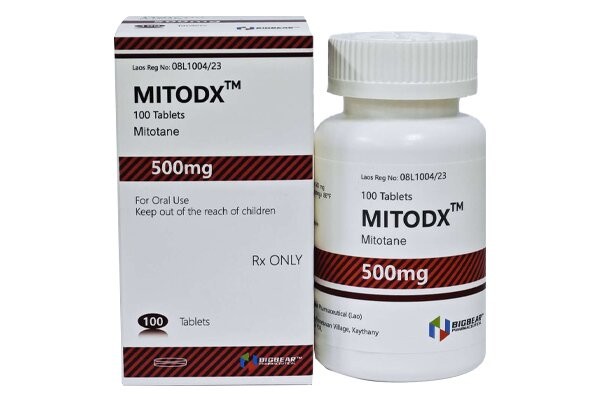
Since its launch, mitotane has become one of the core treatment options for advanced adrenocortical carcinoma (ACC).

 AuthenticGuaranteeFast DeliveryPrivacy
 Indicated for the symptomatic treatment of advanced (unresectable, metastatic or recurrent) adrenocortical carcinoma (ACC).
Mitotane is a chemotherapeutic agent indicated for the treatment of adrenocortical carcinoma (ACC), particularly for unresectable or metastatic cases. It exerts its effect by inhibiting hormone secretion from the adrenal cortex and destroying cancer cells. Administration must be under the guidance of a physician, and regular monitoring of blood drug concentration and adverse reactions is required during treatment.
Administration should be conducted under the supervision of a physician experienced in the use of this medication.
Adults should initiate treatment with a daily dose of 2 g to 3 g of mitotane, with gradual dose escalation (e.g., every two weeks) until the mitotane plasma level reaches the therapeutic window of 14 mg/L to 20 mg/L.
For patients with prominent symptoms requiring urgent control of Cushing’s syndrome, a higher initial dose (4 g to 6 g daily) may be necessary, with more frequent dose escalation (e.g., every week). An initial dose exceeding 6 g/day is generally not recommended.
Dose adjustments are intended to achieve the therapeutic window (mitotane plasma level: 14 mg/L to 20 mg/L) to ensure the optimal and acceptably safe dosage of this product. In fact, plasma levels above 20 mg/L may induce neurotoxicity, and thus this threshold must not be exceeded. Some data indicate that efficacy is enhanced when the mitotane plasma concentration is above 14 mg/L, while levels above 20 mg/L may cause severe adverse reactions. Therefore, the dosage of this product should be adjusted by monitoring mitotane plasma levels to avoid toxic concentrations. For further information on sample testing, contact the marketing authorization holder or its local agent.
Doses should be individually adjusted based on mitotane plasma concentration monitoring results and clinical tolerability until the plasma concentration reaches the therapeutic window of 14 mg/L to 20 mg/L. The target plasma concentration is typically achieved within 3 to 5 months.
After each dose adjustment, mitotane plasma levels should be assessed frequently (e.g., every two weeks) until the optimal maintenance dose is established. Given that dose adjustments do not alter mitotane plasma concentrations immediately, monitoring frequency should be increased (e.g., weekly) when high initial doses are used. In addition, due to tissue accumulation, regular monitoring of mitotane plasma levels (e.g., monthly) is required after the maintenance dose is achieved.
Regular monitoring of mitotane plasma levels (e.g., every two months) is also necessary following treatment interruption. Treatment may be restarted when the mitotane plasma concentration is within the range of 14 mg/L to 20 mg/L. Owing to the long half-life of this product, significant serum concentrations may persist for several weeks after treatment cessation.
Temporary interruption of mitotane treatment may be required if severe adverse reactions (e.g., neurotoxicity) occur. For mild toxicity, the dose should be reduced until the maximum tolerated dose is achieved.
Treatment with this product should continue as long as a clinical benefit is observed. Permanent discontinuation is recommended if no clinical benefit is seen after 3 months of administration at the optimal dose.
Clinical experience with mitotane in pediatric patients is limited.
The pediatric dosage of mitotane has not been fully established, but the dose corrected for body surface area is comparable to that in adults.
Pediatric patients and adolescents should initiate treatment at 1.5 g/m²/day to 3.5 g/m²/day, up to a maximum of 4 g/m²/day. Mitotane plasma levels should be monitored as in adults, with special caution when the plasma level reaches 10 mg/L, as concentrations may rise rapidly. Dose adjustments may be made after 2 or 3 months based on mitotane plasma levels or the presence of severe toxic reactions.
There is no clinical experience with mitotane in geriatric patients, and thus sufficient data are unavailable to provide dosage recommendations for this population. Caution is advised when using this product in geriatric patients, and increased frequency of mitotane plasma level monitoring is strongly recommended.
There is no clinical experience with mitotane in patients with hepatic impairment, and thus sufficient data are unavailable to provide dosage recommendations for this population. Since mitotane is primarily metabolized by the liver, elevated mitotane plasma levels are anticipated in patients with impaired hepatic function. Caution is advised when using this product in patients with mild to moderate hepatic impairment, with monitoring of liver function. Close monitoring of mitotane plasma levels is strongly recommended in these patients. Mitotane is not recommended for use in patients with severe hepatic impairment.
There is no clinical experience with mitotane in patients with renal impairment, and thus sufficient data are unavailable to provide dosage recommendations for this population. Caution is advised when using mitotane in patients with mild to moderate renal impairment. Mitotane is not recommended for use in patients with severe renal impairment, and close monitoring of mitotane plasma levels is strongly recommended in these patients.
The total daily dose may be divided into 2 or 3 administrations. The tablets should be taken with water during meals rich in fat. Patients should be advised not to use any tablets showing signs of deterioration.
This medicinal product should only be handled by the patient or their caregiver, and not by pregnant women in particular. Caregivers should wear disposable gloves when handling the tablets. Any unused medicinal product or waste material should be disposed of in accordance with local regulations for cytotoxic drugs.
Gastrointestinal disorders are the most commonly reported adverse reactions (occurring in 10% to 100% of patients) and are reversible upon dose reduction. Some of these reactions (e.g., anorexia) may be a hallmark of initial central nervous system (CNS) impairment.
Neurological adverse reactions occur in approximately 40% of patients. Other CNS adverse reactions reported in the literature include memory impairment, aggressiveness, central vestibular syndrome, dysarthria, and parkinsonism. Severe adverse reactions are associated with cumulative mitotane exposure and are most likely to occur when the mitotane plasma level is ≥20 mg/L. Cerebral dysfunction may develop with high doses and prolonged use. Neurological adverse reactions are reversible following discontinuation of mitotane treatment and reduction of plasma levels (see Precautions).
Rash has been reported with an incidence of 5% to 25% and is not dose-dependent.
Leukopenia occurs in 8% to 12% of patients. Prolonged bleeding time appears to be a common reaction (90%): although the exact mechanism of this effect and its association with mitotane or the underlying disease are unclear, this finding should be considered when surgery is planned.
Elevated activity of common liver enzymes (γ-glutamyl transferase [γ-GT], transaminases, alkaline phosphatase) is common. Autoimmune hepatitis has been reported in 7% of patients, with an unknown mechanism of action. Liver enzyme levels return to normal when the mitotane dose is reduced. One case of cholestatic hepatitis has been reported. Therefore, the possibility of mitotane-induced liver injury cannot be excluded.
Male hypogonadism (e.g., gynecomastia, decreased libido, erectile dysfunction, fertility impairment) has been reported.
Non-malignant ovarian cysts (accompanied by pelvic pain, bleeding, etc.) have been reported.
Neuropsychological developmental delay has been observed during mitotane treatment in pediatric patients. In such cases, thyroid function should be tested to determine if mitotane-related thyroid injury has occurred. Hypothyroidism and growth retardation have also been observed. Encephalopathy was reported in one pediatric patient 5 months after the start of treatment; this case was considered to be associated with an elevated mitotane plasma level of 34.5 mg/L. Mitotane was undetectable in the plasma after 6 months, and the patient recovered.
Estrogen-like effects (e.g., gynecomastia in male patients and gynecomastia and/or vaginal bleeding in female patients) have also been observed.
Hypersensitivity to the active substance or any of the excipients.
Breastfeeding women.
Concomitant use with spironolactone.
Prior to the start of mitotane treatment, large metastatic masses should be surgically resected whenever possible to minimize the risk of infarction and tumor hemorrhage due to the rapid cytotoxic effect of mitotane.
Signs of adrenal insufficiency are present in all patients with non-functional tumors and 75% of patients with functional tumors. These patients may therefore require steroid replacement therapy. Since mitotane increases plasma levels of steroid-binding proteins, it is necessary to determine the optimal dose of steroid replacement therapy by measuring free cortisol and adrenocorticotropic hormone (ACTH). Glucocorticoid deficiency is more commonly associated, and mineralocorticoid deficiency may also occur; the steroid replacement regimen should be adjusted accordingly.
Mitotane should be immediately suspended in the event of shock, severe trauma or infection due to its primary adrenal-inhibiting effect. Exogenous steroids should be administered in such cases, as the suppressed adrenal glands may not resume steroid secretion immediately. Patients should be instructed to seek immediate medical attention in the event of injury, infection or any other concomitant illness due to the increased risk of acute adrenal insufficiency.
Mitotane dosage should be adjusted by monitoring plasma levels, especially when high initial doses are deemed necessary. Dose adjustments may be required to achieve the desired therapeutic level (within the 14 mg/L to 20 mg/L window) and avoid specific adverse reactions.
Sufficient data are unavailable to support the use of mitotane in patients with severe hepatic or renal impairment. Caution is advised when using this product in patients with mild to moderate hepatic or renal impairment, and close monitoring of mitotane plasma levels is strongly recommended.
Hepatotoxicity has been observed in patients treated with mitotane. Cases of liver injury (hepatocellular, cholestatic, and mixed) and autoimmune hepatitis have been reported. Liver function tests (alanine transaminase [ALT], aspartate transaminase [AST], bilirubin levels) should be monitored regularly, particularly during the first few months of treatment or when dose escalation is required.
Adipose tissue acts as a reservoir for mitotane, leading to a prolonged half-life and potential accumulation. Therefore, mitotane levels may rise even with an unchanged dose. For this reason, monitoring of mitotane plasma levels (e.g., every two months) is required after treatment interruption due to the potential for prolonged release of mitotane from tissues. Caution is strongly advised and close monitoring of mitotane plasma levels is recommended when treating overweight patients.
Prolonged administration of high doses of mitotane may cause reversible cerebral injury and dysfunction. Regular behavioral and neurological assessments should be performed, especially when mitotane plasma concentrations exceed the threshold.
Mitotane administration may affect all blood cell lineages. Leukopenia (including neutropenia), anemia, and thrombocytopenia are commonly reported during mitotane treatment. Red blood cell, white blood cell, and platelet counts should be monitored during treatment.
Prolonged bleeding time has been reported in patients treated with mitotane and should be considered when surgery is planned.
When mitotane is administered to patients receiving coumarin anticoagulants, close monitoring is required to determine if adjustments to the anticoagulant dose are necessary.
Substances metabolized by cytochrome P450, particularly CYP3A4: Mitotane is a hepatic enzyme inducer. Caution is advised when mitotane is used concomitantly with medicinal products metabolized by the liver (see Drug Interactions).
Females of childbearing potential must use effective contraception during mitotane treatment.
Ovarian cysts have a relatively high incidence in this population. Isolated cases of complicated cysts (adnexal torsion and rupture of hemorrhagic cysts) have been reported, with improvement after mitotane discontinuation. Females should seek prompt medical attention if they develop gynecological symptoms (e.g., bleeding and/or pelvic pain).
Neuropsychological developmental delay has been observed in pediatric patients and adolescents during mitotane treatment. In such cases, thyroid function should be tested to determine if mitotane-related thyroid injury has occurred.
This product has a significant impact on the ability to drive and operate machinery. Ambulatory patients should be warned not to drive or operate machinery.
If any issues arise, please contact us immediately.
Email:laosbigbear@gmail.com
Take this medication as soon as you remember. However, if your next scheduled dose is nearly due, skip the missed one. Never take a double dose to make up for the one you forgot.
Seek immediate emergency medical care, or contact the Poison Control Helpline.
Do not drive or perform potentially dangerous tasks until you understand how mitotane affects you, as it may slow your reactions.
Certain drugs should not be used together due to safety risks. Some medications can alter blood concentrations of other drugs, which may heighten side effects or reduce treatment effectiveness.
Mitotane may be influenced by other medications, including prescription drugs, over‑the‑counter products, vitamins, and herbal supplements. Inform your doctor about all medicines you currently take, as well as any you begin or stop using.
Copyright2024@ BIGBEAR All right reserved Bigbear | Bigbear Pharmaceutical | Bigbear Laos


